Inside Reform: Laura Kuenssberg follows Farage’s party as it experiences the glare of scrutiny
8 minutes agoLaura KuenssbergPresenter, Reform: Ready to Rule?
“We are halfway towards being ready,” Nigel Farage tells me. On occasion, he is quite unlike other politicians, with flashes of honesty you wouldn’t hear from others. He says he wants to be prime minister, while admitting his party is not yet ready for power.
Yet sometimes, he is entirely like the cliche – the long-serving politician who is intensely reluctant to confront accusations of past mistakes. Following the storm last year over his behaviour as a teenage pupil at Dulwich College, a private school in south-east London, with many people claiming they witnessed racism or antisemitism, Farage tells me forcefully that he hasn’t for a single moment worried about whether he upset anyone.
“I think there were two people who said they were hurt, all right, and if they genuinely were then that’s a pity and I’m sorry, but never, ever did I intend to hurt anybody,” he says. “Never have.”
That’s the classic politician’s apology – sorry “if” anyone affected felt hurt and upset by what happened all those years ago. We know they did feel that way. I’ve spoken to some of those affected, and you can still hear the shake in their voices when they talk about the memory.
Yet what Farage has achieved in the past year with Reform, the self-styled “people’s army” he leads, is off the charts. For decades he’s had influence, but it’s been exercised from the sidelines. Now, with successive opinion polls putting his party ahead of Labour and the Conservatives, he poses a grave threat to the two political tribes who have passed power back and forth between them as voters saw fit, for 100 years.
Frankly, Labour and the Tories are terrified.
But with mounting expectation in Westminster that Reform will amass significant votes at the next election, due in 2029, is it equipped to govern? Over the past few months, we’ve been following Farage’s party for a BBC documentary, asking if Reform is “Ready to Rule”. Does the party know what it’s doing? Is it credible? And with a taste of power – it now controls more than 10 town halls in England – how is it handling the full glare of scrutiny that dominates the path to Number 10?
We’ve spent time interviewing Farage and other senior party figures like Richard Tice, policy chief Zia Yusuf and chairman David Bull. Our cameras were with the party’s largest council, Kent, as it tried and then battled to find waste to “slash” as promised. We filmed on the by-election campaign in Caerphilly as Reform tried, then failed to capture the Welsh seat in 2025. Although, of course, so much has happened to the party and politics more widely since the last local elections in May that it is impossible to include every single twist and turn in an hour-long documentary.

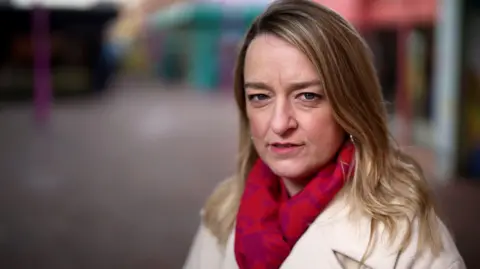
In many ways, Reform has become a force extending far beyond a flash in the pan. Not just in its months of leading the polls, but in its dramatic expansion of membership numbers to what it claimed in December was 268,000, and its development of a content-creating machine. We see the latter on a tour of Reform HQ which has its own TV studio and a relentless focus on pumping material onto social media.
Reform is now a firm fixture in the public political conversation. That’s not just down to its sharp use of social media to make an impact, but a grasp of the basics too.
Take last summer for example, when the big political parties were largely silent, exhausted by the long haul of the year. Reform instead resolved to hold a press conference every week to try to generate headlines. What better opportunity to make some noise?
The party has gone way beyond Nigel Farage’s personal knack for creating headlines, partly by picking potent issues to campaign on. This includes crime and immigration which Reform repeatedly sought to draw links between over the summer, after multiple protests took place outside asylum hotels. Meanwhile, a drumbeat of defections have given the party a dose of that elusive political currency: momentum.
There is an obvious downside to the fact that so far these defections have been a conveyor belt of former Conservatives. Those pleading forgiveness for their old party’s perceived mistakes, like Robert Jenrick or Suella Braverman, have been welcomed. Whether Farage can “unite the right” to avoid a split right-wing vote in the next general election is an ongoing challenge, and Reform doesn’t want to wear the tag of being home for the “same old Tories” – but at the same time the party is eager for figures who have experience in government, and in Parliament.
If, by Farage’s own admission, the party is only “halfway ready” for power, politicians who know how to campaign and how to navigate the Commons and Whitehall are a bonus. For any political party, demonstrating you are growing, gaining force, is a plus.
Yet just as there’s more evidence of Reform’s ability to pull in support, the party has given more fodder to rival politicians and many members of the public who are alarmed by what they see. For weeks it was sucked into addressing allegations and witness statements from many of Farage’s former classmates in the 1970s. A total of 26 people signed an open letter alleging he was racist towards non-white and Jewish pupils, and I spoke to some who say they were victims of, or witnessed, the abuse. But Farage denies the worst of the claims and dismisses the rest.
The Reform leader told me he doesn’t think the fuss over his past will make a difference to voters, though his responses have varied from saying he didn’t remember, to saying it was just playground banter, to claiming some of it was made up. It may well be the case, as we heard from some likely Reform supporters, that what he’s claimed to have done so long ago simply doesn’t matter – particularly to those already interested in the party.
But the whole episode is not what the party would have chosen to spend a couple of weeks having to respond to. Farage’s own reaction to repeated questioning over it included a press conference in which he drew attention to the broadcast culture of the 1970s and 80s and mentioned the comedian Bernard Manning.
Unusually, Farage seemed uneasy with the lens being turned so sharply on him. Yes, he’s had years in the spotlight, but largely as a critic or campaigning figure on the fringe of politics. Their position in the polls brings an entirely different level of scrutiny, the party is well aware of it and it’s only going to grow.
The episode was worse because again and again, Reform has had to boot out some recently elected councillors for unsavoury or downright offensive views they have expressed. Even the leader of one of Reform’s councils, Ian Cooper, had to quit in the last few weeks after an investigation into his social media use. That’s disruptive and damaging.
And while Nigel Farage has always been careful to express distaste and to distance himself from Tommy Robinson, the far-right campaigner’s recent endorsement of Reform’s candidate in the upcoming by-election in Gorton and Denton raises the question of the relationship
These stories keep coming. Reform might try to use them as evidence that the “the establishment” is going after the plucky insurgents. But it can galvanise its opponents to fight back harder, or even band together, as we saw in the Caerphilly by-election where Plaid Cymru seems to have benefited from tactical votes to block Farage.
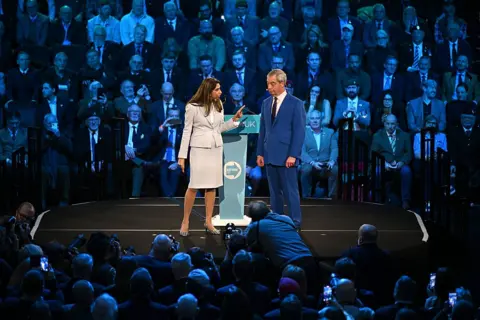 Getty Images
It is true that all political parties have associations they’d rather not have, councillors who are chucked out for fall outs or revelations about past bad behaviour, or members who make terrible mistakes – just ask Labour which is dealing with the fallout over Lord Mandelson’s links to Jeffrey Epstein this week. But it’s also the case that proportionately, Reform has lost more councillors since May 2025 than any other political party.
With Reform running local authorities for the first time, carrying responsibility for billions of pounds of taxpayer cash, more attention is now being paid to what’s going on in these shop windows for what a Reform government might look like. Our cameras followed some of the goings on at Kent County Council, the biggest Reform fiefdom, since they took charge in May. There have been internal spats, members booted out and an embarrassing leak of an online council meeting. Though the new group arrived with huge fanfare, we see the councillors actually find it tough going.
In a revealing admission about his experience, deputy cabinet member Paul Chamberlain, said “we were expecting surprises… we were expecting absolute craziness… we’d watched Doge in America”. But in fact, “there were no big surprises, just a culture that is a local government culture, not one you’d see in a commercial world,” he told us.
Reform made quite a big deal of setting up its own version last year of Donald Trump’s Doge – the Department of Government Efficiency – with Yusuf leading it until recently. The results have arguably been less eye-catching than the party had hoped.
The group in Kent has managed to find some savings – it claims tens of millions of pounds – but just like some other Reform councils, they are planning to put council tax up by nearly 4%. Yes, it’s lower than the rate of increase from the year before under the Tories, but it doesn’t quite match the swashbuckling rhetoric of the days before Reform actually had power.
Reform’s national campaign last year did not specifically promise to cut council tax, though it did make vows about lower tax in the long term. Some local candidates in some parts of England promised to “cut waste, and cut tax”. Now in local government, with cost pressures, they simply haven’t been able to do that. The lesson perhaps from Reform’s first taste of power is that governing is harder than it looks.
The party’s progress for the last few months reveals an organisation growing at break-neck speed, whether it be through its councils, MPs or leadership, high on its success. As we hear time and again from those planning to vote Reform, their current success is the flipside of the failure of the two big traditional parties. The Tories’ election disaster in 2024 and Labour’s crash in popularity since taking power have been an absolute gift to a politician like Farage with an appetite for oxygen and influence – seizing what he calls “a gap in the market”. The upcoming Manchester by-election is another major opportunity for Reform to grow a bit more, if it can stave off the threat of the Greens and beat Labour in that contest.
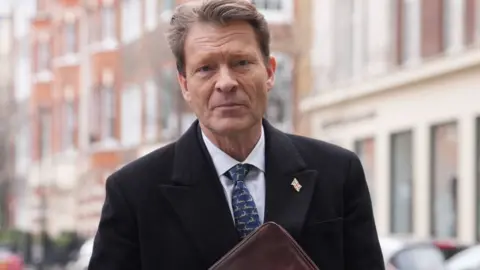 PA
PABut sustaining success is far from inevitable – Reform will ultimately need money to keep pouring in (notwithstanding the record £9m donation from cryptocurrency investor Christopher Harborne the party received last year), more MPs if they want to make a real impact in Parliament, more planning and more professionalisation.
This will bring more examination, more questions, more power and with it more obligation.
There’s a scratchiness, perhaps a suspicion, about the new levels of scrutiny. In our final conversation for the documentary, I asked Farage what the downside of the party’s recent success had been. His answer seemed both candid and revealing. “The worst thing is you wake up in the morning. A local councillor from somewhere in the country has done something or said something and guess what? You’re the one that’s responsible,” he told me. “I’m more than happy to answer for myself and what I get and what get wrong. But that’s the trouble with politics. The trouble with political leadership is you actually become responsible for everything.”
He told me he didn’t struggle with responsibility, but added: “I don’t [like] being let down.”
The incontrovertible truth is that however much fun you can have in politics and Farage is certainly doing that, power brings great responsibility. If he really wants it, that burden will only become heavier to bear.