Alton Towers to remove disability pass for people with ADHD and anxiety
4 hours agoErica WitheringtonDisability affairs reporter

 BBC
BBCAlton Towers will not allow some people with conditions like autism, ADHD and anxiety to use their disability queuing system this February half-term.
Merlin Entertainments provides a ride access pass to help visitors to its theme parks who have a difficulty queuing because of their disability or medical needs.
They say the number of people requesting the pass has been increasing, adding that disabled visitors have said the system “simply isn’t working for them” and that “queue times for these guests have increased”.
A new restriction will also apply at Chessington World of Adventures and Windsor Legoland, as part of a trial to reduce the number of people who get access to the pass.
Neurodiverse people can become overwhelmed or distressed when surrounded by large numbers of people, which can bring on sensory overload or panic attacks.
Up until now, people who have a “difficulty with crowds” have qualified for the ride access pass, but only those with “difficulty standing,” “level access” or “urgent toilet needs” will do so during the half-term trial.
Others will have to queue as normal.
Merlin says it offers support to people with difficulty with crowds through “a range of reasonable adjustments”.
‘No one likes queuing’
Henry Shelford, chief executive of the ADHD UK charity, said “a group of people will be excluded because of this lack of accommodation”.
“It’s different from a child just not being happy about it, because no one likes queuing,” he said.
“When a kid has ADHD, their energy and their focus makes [queuing] just impossible.
“As an adult with ADHD, I can tell you there’s a whole lot of stuff I haven’t done because I can’t face the queuing.
“I have a need to move all the time, and being penned in in that way is very difficult for me as an adult. And it’s near impossible for children and others.”
All visitors to Alton Towers can opt to purchase a “Fastrack” pass to skip the queues, but these start at an extra £35 on top of the ticket price.
The change follows an update by the disability access card provider Nimbus, which is recognised by many attractions and events.
Nimbus has split its former “standing and queuing” card section into two separate symbols: “difficulty standing” (a physical need) and “difficulty with crowds” (often linked to neurodivergence or anxiety).
During half‑term, Merlin says new eligibility for the ride access pass is being trialled.
Those whose Nimbus card shows only the “difficulty with crowds” icon will be asked to visit guest services for personalised support instead.
The approach will be reviewed after February before the theme park opens fully in March.
Jonathan and Cheryl Willis contacted BBC Your Voice when they heard about the changes to the ride access pass for half-term.
They had tickets to go with their son Joshua, who has autism, but say there is no way he will be able to join the main queues.
“It’s his special place,” Cheryl said.
“He has a special interest in rollercoasters – he’s going to be absolutely devastated if he can’t go.”
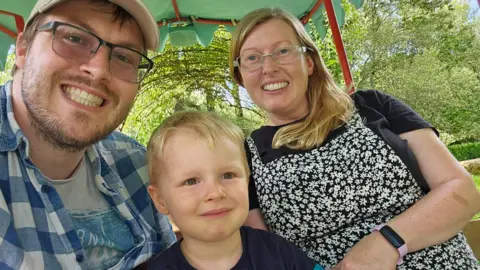 Jonathan Willis
Five-year-old Joshua also has mobility issues, but after the changes to the Nimbus card scheme, his parents said he had only been allocated the “difficulty with crowds” icon on his card.
Cheryl said not being able to take her son to Alton Towers would be particularly difficult as he is not currently in nursery or school, and otherwise struggles to leave the house.
“He’s learning to be out and about in the world,” she said.
“They don’t understand how massive a problem this is causing to people like us.”
Rob Smith, chief operating officer at Merlin Entertainments, said growing demand had led to issues for people using the passes, but recognised the suggested eligibility changes had “raised concerns for some guests”.
“Our commitment to supporting neurodiverse guests and those with mental health needs remains,” he said.
“We are listening carefully to this feedback and are committed to keeping this approach under review ahead of our main season openings in March.
“We remain deeply committed to creating inclusive experiences and ensuring all guests feel supported when visiting our attractions.”
