Bailiffs used to pursue NHS staff over pay errors
2 hours agoCharlie HaynesEast Midlands Investigations

 BBC
BBCNHS payroll errors have led to thousands of staff being referred to debt collectors, a BBC investigation has found.
Referrals to bailiffs to collect overpaid wages have increased from 1,807 in 2020-21 to 2,683 in 2024-25, according to NHS data obtained by Freedom of Information requests.
A number of NHS workers have told the BBC these referrals have left them upset, stressed and in some cases in debt.
A spokesperson for NHS England said it had “immediately established a payroll improvement programme after hearing about these awful cases and the distress caused”.
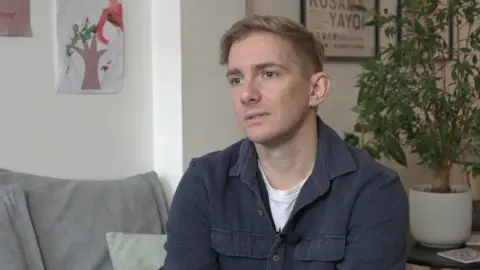
Dr Tom Horne said the first time he found out he had been overpaid by the NHS was when a court summons came through his door.
“They’re not thinking about the human being on the end of that debt collection letter… trying to pay their bills, live their life and pay the mortgage,” he said.
The 42-year-old father of two, from Nottingham, said his experience with Sherwood Forest NHS Trust, which runs King’s Mill Hospital in Sutton-in-Ashfield, had left him feeling stressed and angry.
“By the time I left [the] trust, they’d repeatedly underpaid me. They then paid me a big chunk at once – I assumed it was correct.
“Honestly, at that point I had no way of knowing,” Horne added.
He said he finally discovered there had been an error in his pay six months after he left the trust.
“I received a debt collection letter and a county court date. I’d never had a court summons before.
“It was scary at first, trying to work out what was going on,” he added.
Horne said he had been left worried and confused after receiving the bailiff’s letter from a company instructed by Sherwood Forest NHS Trust.
He then called the trust’s HR team and was told they had tried to contact him – with a letter to an address he had not lived at for four years.
Horne said he had repeatedly updated his address with the trust.
“They could have just emailed me – instead they sent it over to bailiffs.
“They had forwarded it on and gone ‘not our problem anymore’. They weren’t in any way helpful or understanding of the situation that I was in,” he added.
‘Paid it in a panic’
Horne said after paying court fees, credit card interest and additional tax, he had been left significantly out of pocket.
“I think the original debt was £1,900. It was probably close to £3,000 once you’ve added in everything,” he said.
“I don’t even know if that was the right amount or if it had additional bailiffs fees – I just paid it in a panic to stop myself getting a county court judgment (CCJ).”
A CCJ is a court order that can be issued to an individual if they fail to repay money they owe and can leave people struggling to get a mortgage or paying higher interest rates.
Horne said his family had to make sacrifices to pay off the debt.
“You have to think about how we’re gonna pay the nursery fees this month,” he said.
Sherwood Forest NHS Trust originally told the BBC they had not referred any of their employees to debt collectors but have since apologised to Horne in a statement and said they would learn from his case.

A BBC Freedom of Information request sent to almost every NHS trust in the UK revealed tens of thousands of NHS staff were overpaid every year.
Of the 232 trusts and boards contacted, comparable data was received from 142 of them.
Each year tens of thousands of NHS staff are overpaid – and in the period of time we have data for, that figure has remained roughly the same.
But there has been a steady increase in the number of trusts referring employees and staff being chased by debt collection agencies and bailiffs.
Leicester University Hospitals referred 226 staff to debt collectors last year – the highest figure of trusts that responded to the FOI request.
In a statement the trust said “the use of debt collection agencies is always a last resort,” and some of those were historic overpayments being dealt with some time afterwards.
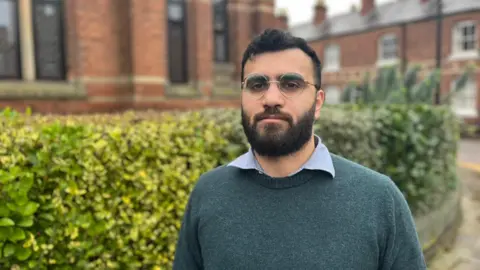
Dr Hamza Usman also found himself struggling to deal with payroll issues.
“I was overpaid for three months continuously – despite repeatedly contacting payroll to inform them,” he told the BBC.
Three months after Usman, 30, had finished working for Somerset NHS Foundation Trust, his family received a letter threatening him with court action.
He had moved to Australia to practise medicine and said he was frustrated the trust could not deal with the issue while he was working for them.
“It doesn’t come as a surprise. It just is a mark of the incompetence in the bureaucracy,” Usman said.
He added the NHS needed to get better at dealing with payroll issues like this.
A spokesperson for Somerset NHS Foundation Trust apologised to those affected and said they were working “to ensure payment errors are kept to a minimum”.
Trade unions representing NHS workers have called for change following the BBC investigation.
“We urge NHS bodies to urgently find the resources and effort to stop this happening,” said Emma Runswick, deputy chairwoman for the British Medical Association.
Sharon Wilde, GMB’s national officer for health, said: “Mistakes happen.
“When they do, trusts need to work sympathetically with staff to develop a payment plan, not charge in like a bull in a china shop.”
‘Compassionate approach’
NHS England said it would now be looking to improve its payroll processes.
“We have immediately established a payroll improvement programme after hearing about these awful cases and the distress caused, helping to substantially reduce payroll errors for the dozens of NHS trusts taking part,” said Tom Simons, chief HR officer at NHS England.
Health minister Karin Smyth said: “NHS staff should not be out of pocket, threatened and pursued ruthlessly due to errors made by their employers.
“If trusts make errors with overpayments, we expect them to show a compassionate and reasonable approach with staff.”
A Scottish Government spokesperson said: “If any member of staff has been over paid, we expect employers to work compassionately with individuals to agree a repayment schedule.”
A spokesperson for NHS Wales Shared Services Partnership, which provides payroll services to NHS staff in Wales, said “in line with NHS Wales recovery of overpayments guidance, debt collection agencies may be used as a last resort when all local attempts to recover outstanding public monies have been exhausted”.
Northern Ireland’s Department of Health said it did not use debt collection agents, but would refer “some debts to small claims court”.
Additional reporting by Jonathan Fagg, Miriam Earp and Amy Sharp
Follow BBC Nottingham on Facebook, on X, or on Instagram. Send your story ideas to eastmidsnews@bbc.co.uk or via WhatsApp on 0808 100 2210.
More on this storyRelated internet links