North Sea tanker collision – what we know so far
3 hours agoVicky WongBBC NewsEsme StallardClimate and science reporter
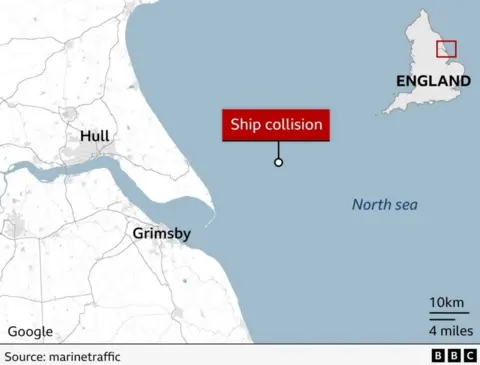
One person is missing and more than 30 people have been rescued after an oil tanker and cargo vessel collided in the North Sea off the coast of East Yorkshire.
Both ships remained on fire late on Monday evening, and the possible environmental impact is still being assessed. Here is what we know so far.
Which ships were involved in the incident?
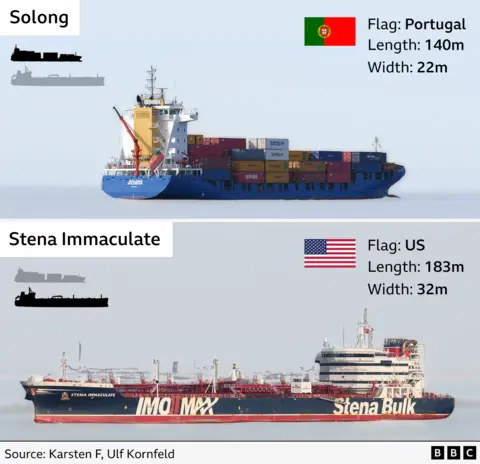
The Stena Immaculate is a US-flagged oil and chemical tanker, which was on its way to Hull after departing from a Greek port, according to ship tracking site MarineTraffic.
The Solong is a Portuguese-flagged container vessel with capacity to carry 9,500 tonnes of cargo.
It had been making its way south from the Scottish port of Grangemouth to Rotterdam in the Netherlands.
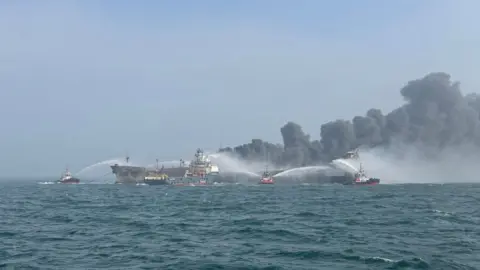
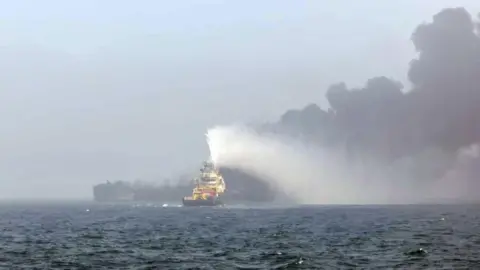
Photos and videos from the scene showed large clouds of smoke billowing out from the oil tanker after the ships collided on Monday morning, and the company which manages the Stena Immaculate reported “multiple explosions”.
At around 22:00 GMT on Monday, the Coastguard said both vessels were still on fire.
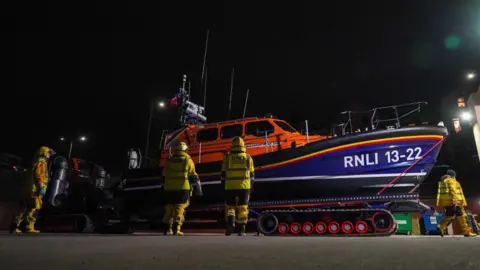
One crew member on the Solong remained missing and the search for them has been called off, the rescue service said.
Another 36 crew members from both vessels were safely brought back to shore and one person was taken to hospital.

What were the ships carrying and has there been environmental damage?
The Stena Immaculate was carrying jet fuel – which, a US official confirmed to CBS News, the BBC’s US partner, was being transported on behalf of the American military.
Crowley, the company which manages the vessel, confirmed that fuel had been released into the sea, though the Coastguard said the extent of any pollution was still being assessed.
Jet fuel has a high boiling point, meaning it will evaporate slowly and is relatively toxic.
Marine life that comes into contact with it may be killed. This type of fuel can be broken down in the water by bacteria and it appears from images some of it has already caught fire and been burnt off.
 Getty Images
The Solong was carrying 15 containers of sodium cyanide among its cargo, according to a report from maritime data provider Lloyd’s List Intelligence.
Dr Mark Hartl, associate professor of marine biology at Herriot Watt University, said sodium cyanide is very soluble in water and can be toxic because it interferes with the respiration of animals, but at this point it is not clear if any has entered the water.
Alastair Hay, professor of environmental toxicology at Leeds University, said there is a risk that some hydrogen cyanide gas might have been produced if the sodium cyanide came into contact with water. If this happened, the hydrogen cyanide “could present a risk to any of those involved in rescue”, Prof Hay added.
Dr Hartl said marine creatures have a major avoidance reaction so may have already vacated the affected area.
Marine ecology and conservation expert Dr Tom Webb said the chemical pollution resulting from incidents like this one “can directly impact birds, and it can also have long-lasting effects on the marine food webs that support them”.
How did the collision unfold?
Data from tracking site MarineTraffic appears to indicate that one ship was moving and the other was nearly stationary when the collision happened.
The Stena Immaculate was drifting at a speed of 0.1 knots at 09:48 GMT.
The Solong approached from the north at a speed of 16 knots.
Crowley said the Stena Immaculate was struck by the Solong while it was anchored.
It said its cargo tank carrying jet fuel was ruptured in the crash, causing a fire and the release of fuel.
However, it is still unclear what caused the cargo ship to strike the oil tanker.
Ernst Russ, the owner of the Solong, says both vessels had sustained significant damage in the impact of the collision and the subsequent fire.
 PA Media
 Getty Images