Olive oil and bone broth: Do viral gut health foods actually work?
1 hour agoYasmin RufoBBC News

 Getty Images
Gut health has become one of social media’s favourite buzzwords.
From drinking chia seed water first thing in the morning to adding sea moss gel to smoothies and sipping bone broth to “heal” your gut, these products are credited with everything from better moods to more energy.
But behind the viral foods, scientists say the reality is more complicated – especially as it’s a growing field with new evidence emerging almost every day.
While the gut microbiome does play a crucial role in our wellbeing, evidence for many of these fixes is thin and for most healthy people, obsessing over gut “healing” may be unnecessary.
What is the gut microbiome?
BBC science broadcaster Caroline Steel describes the gut as the entire digestive tract, from mouth to anus.
Inside it lives the gut microbiome – trillions of bacteria, viruses and fungi that play a crucial role in how the body functions and “impacts your mental and physical health”.
Steel says our “gut microbiome is more unique than our fingerprint” and a healthy microbiome is linked to better energy extraction from food, blood sugar regulation and immune defence.
Research also suggests associations between gut health and mental wellbeing, including lower anxiety and improved mood.
Do viral foods live up to the hype?
Microbiologist Alan Walker and gut health scientist Dr Megan Rossi say many trending foods contain a “small seed of truth” but are often oversold as miracle products.
- Chia seed water: Chia seeds are rich in fibre, “which can feed beneficial gut bacteria and help with bowel regularity” according to Rossi. Walker explains that no single fibre source is enough on its own as different microbes feed on different fibres, so diversity matters more than any one ingredient. “There’s no harm in drinking chia seed water,” he says, but it has little benefit on its own.
- Olive oil shots: Olive oil is widely considered to have anti-inflammatory benefits, is heart-healthy and may help ease constipation, Walker explains. However, there is little evidence that taking it as a concentrated “shot” specifically boosts the microbiome. “There’s no meaningful difference between drinking it straight and adding it to your food,” Walker says.
- Sea moss gel: Sea moss gel, a type of seaweed, has become a hyped product as it provides fibre and certain vitamins and minerals. Yet Rossi says “there’s very little scientific evidence supporting its use for improving the gut microbiome or digestive function”. She particularly cautions against high doses, especially in those with inflammatory bowel disease. Walker says the potential downside to sea moss gel is that seaweeds are a source of heavy metals and iodine and excessive intake may cause health problems.
 Getty Images
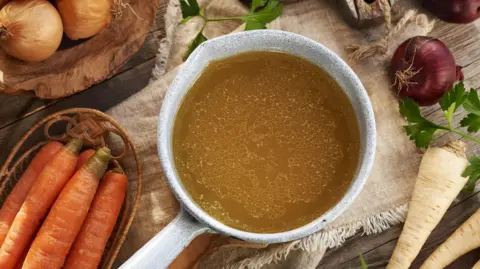
- Bone broth: Bone broth is made by simmering animal bones in water with an acidic ingredient (like vinegar) and herbs or vegetables for at least 24 hours with the aim of extracting proteins and minerals. It is nutrient-dense and can be a comforting food but Walker says most of its nutrients are absorbed in the small intestine, while the majority of gut microbes live in the large intestine. That means little reaches the microbes themselves. “There’s no strong evidence it has systematic beneficial effects on the gut microbiome,” he adds. Rossi agrees and adds that she’s seen “the negative effect it can have on cholesterol levels if the saturated fat isn’t skimmed off the top of it”.
- Kombucha: Kombucha is a fermented tea and Rossi says she’s a “big fan” of traditional kombucha because it contains natural acids and antioxidant plant compounds created during fermentation, which are linked to health benefits. However, just like extra virgin olive oil, not all kombucha is created equal. “Look for floaters, which are a sign of a living kombucha culture working its magic; check for added vinegar – the real deal doesn’t need this added as the microbes do it themselves; and ditch the sugar-free varieties with added sweeteners, including stevia,” she says.
Steel says signs that something may be wrong with your gut can include persistent constipation, diarrhoea, excessive gas or ongoing abdominal pain.
In these cases, she explains it’s important people should seek medical advice rather than turning to extreme elimination diets.
“If you’ve got a problem with your gut then doing something like cutting out bread isn’t going to heal it.”
She stresses that most people do not need dramatic dietary interventions and “most of us don’t need to heal our gut as if your gut is healthy, none of these things are going to make a difference”.
Rather than chasing trends, she says there are some easy things people can do to keep their gut happy like “eating more plants, increasing fibre and cutting back on ultra-processed foods”.