The two sides of Liverpool parade attacker Paul Doyle
1 hour agoJonny HumphriesNorth West

 BBC
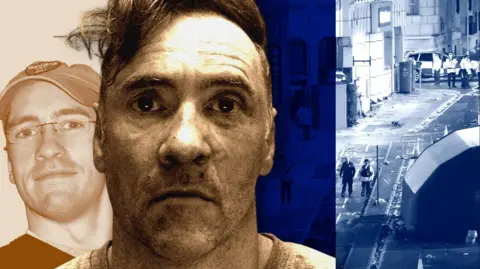
BBCTo his close friends and family, Paul Doyle was a “diamond”. A dependable, generous and successful father-of-three.
To his 134 victims – the babies, children and adults mown down at the Liverpool FC victory parade on 26 May – he represents sheer terror.
That is the paradox of Paul Doyle: Why did a man who served in the Royal Marines and then built a successful and stable life plough a 1.9 tonne Ford Galaxy Titanium into a joyous crowd of Liverpool FC fans?
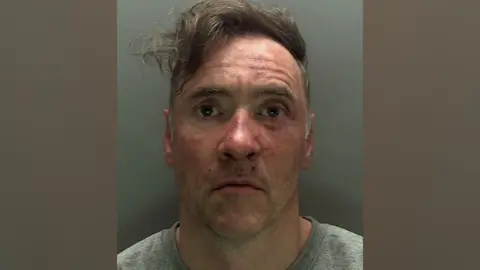
The 54-year-old, from Croxteth in Liverpool, was jailed for 21 years and six months at Liverpool Crown Court earlier after admitting 31 offences – including dangerous driving, affray and multiple counts of causing grievous bodily harm with intent.
Over two days of extraordinary proceedings, the court heard and saw how IT networking engineer Doyle’s car knocked prams aside and dragged children and an elderly woman under the wheels on Liverpool’s packed Water Street.
Those victims included Ukrainian war refugee Anna Bilonozhenko and Manchester Arena bombing survivor Francesca Massey, who surely thought they had experienced more than their share of trauma before 26 May.
And yet, Doyle is still a man with friends.
“It’s quite hard for some people to understand but from my perspective, he’s still Paul to me,” said one, who did not wish to be named.
“Obviously the harm he’s caused to the victims isn’t great, but I’m still grateful he’s in my life.”
That loyalty was a result of 32 blameless years of education and hard work.
He was a man who avoided drugs and alcohol and who loved the outdoors. His hobbies included triathlons and hiking with his close circle of friends in Eryri National Park or the Lake District.
One friend said Doyle would “drop anything to help you”.
He highlighted how the 54-year-old had agreed to drop off and pick up his wife’s friends in the city centre on the day of the parade amid crowds of around a million.
“If someone had asked me to do that, I probably would have told them to [expletive] off, but that was Paul,” he said.
 CPS
CPSThose who worked with him in various companies across the UK, including fellow ex-soldier Mike Hern, told the BBC he was a well-liked colleague.
Mr Hern described him as a “mentor” with a “good sense of humour”.
His neighbours in the smart, quiet Croxteth cul-de-sac on Burghill Road, where Doyle lived with his wife and three sons for around 10 years, saw the family as “lovely people”.
Catherine Tremarco, who used to live next door to Doyle and his wife at a previous address before he moved to Burghill Road, echoed those sentiments.
She said: “They were lovely neighbours. When they moved in they were getting married and they invited the whole close to the wedding.
“My husband and I couldn’t go because we had a pre-booked holiday, but I couldn’t do them any injustice, they were lovely.”
One man, who serviced the car that Doyle “used as a weapon” in the words of prosecutors, told the BBC: “To me he seemed like a sensible, family man.
“He gave no indication of being capable of something like that. I’m very surprised something like this happened.”
Doyle ‘bit sailor’s ear off’
The news that Doyle was responsible for injuring and maiming helpless pedestrians was met by his friends and family with astonishment.
When he got the message to say Doyle was responsible for the carnage being broadcast on every national news network, his friend said: “I just went blank.”
But deeper in his past, and unknown to even some of his closest friends, was evidence of a dangerous, explosive temper.
We now know that between the ages of 18 and 22, Doyle’s life seemed likely to be heading down a troubling path.
Despite making it into the Royal Marines, he had racked up a series of convictions including for serious violence and was forced out of the military.
Most alarmingly, on 2 July 1993, a drunken fight in a Lancashire pub ended with Doyle biting the ear off a sailor, leading to a 12-month prison sentence for causing grievous bodily harm (GBH) without intent.
That offence was not out of the blue. While in the army he had military convictions for common assault, criminal damage, and using “violence against a superior officer”.
He had also been convicted of another GBH offence over a drunken nightclub brawl.
That side of Paul Doyle appears to fit more with the man depicted in dashboard camera footage from inside his vehicle on 26 May, screaming obscenities at his innocent victims as they thud against the bonnet.
But after his release from prison in 1994, Doyle underwent a remarkable transformation.
He enrolled at the University of Liverpool where he studied maths and psychology. A successful career in IT followed.
One friend who met Doyle in the early 2000s told the BBC: “I don’t suffer fools gladly, but he was just really competent.
“If he could help you he would, and if he didn’t know he would say ‘let me find that out for you’.”
Companies House records indicate Doyle started a business selling baseball caps.
But his friends said that was a venture started to show his three sons how business worked and was never intended as a real source of income.
In the words of prosecutor Paul Greaney KC: “Those efforts to rehabilitate himself after a difficult early adulthood only serve to make more shocking, and tragic, what he did in Liverpool that day this May.”
The court heard Doyle himself had taken months to get to grips with the reality of what he had done before pleading guilty.
His barrister, Simon Csoka KC, said: “The defendant wasn’t able immediately to reconcile the man that he has been for the last 30 years with the way he behaved on 26 May.
“In the same way that nobody who knows him well could believe it; neither could he for some time.”
‘The fans were not to blame’
Whether Doyle has truly accepted responsibility for his atrocious decisions on 26 May is in dispute.
The court heard how his police interviews were peppered with false claims and outright lies, blaming the fans for making him fear for his life.
He claimed he had seen someone with a knife, he claimed a bottle had been thrown, he claimed he stopped as soon as he realised he had struck someone.
It was all untrue.
“The position should be stated clearly,” said Judge Andrew Menary KC, as he passed sentence.
“The crowd did not cause this incident; they reacted to it… The chaos that unfolded was caused solely by your driving, and any attempt to place responsibility on the public or the Liverpool supporters present would be unfair and wholly unfounded.”
Listen to the best of BBC Radio Merseyside on BBC Sounds and follow BBC Merseyside on Facebook, X, and Instagram, and watch BBC North West Tonight on BBC iPlayer.
More on this storyLiverpool