‘The second home ban has breathed new life into my village’
3 hours agoJo LonsdaleBBC North East and Cumbria Investigations

 BBC
BBCNearly eight years ago, Beadnell on the Northumberland coast became one of the first villages in the country to ban any homes built on new sites being used as second homes or holiday lets. The number of permanent residents has increased, bringing what some say is “new life” but others argue the policy is not enough to save rural communities or think it an unwarranted attack on tourism.
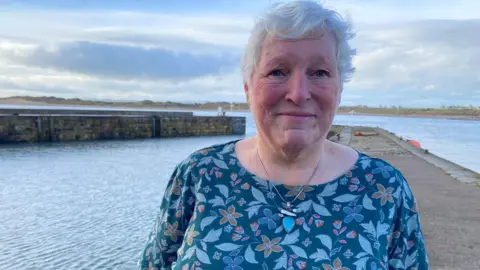
Driving towards Beadnell harbour, 75-year-old Jennifer Hall nods one by one at the large houses overlooking the sea.
“Holiday let, second home, second home, holiday let, second home, holiday let,” she intones.
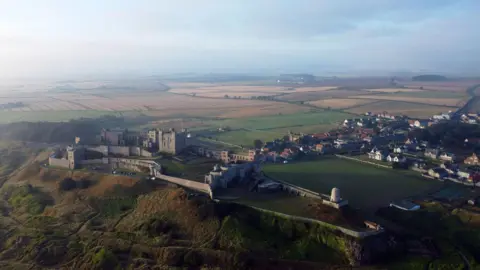
Clustered barnacle-like at the end of a glorious arc of sand, Beadnell, along with the neighbouring villages of Bamburgh and Seahouses, has long been a magnet for those seeking refuge from the madding crowd.
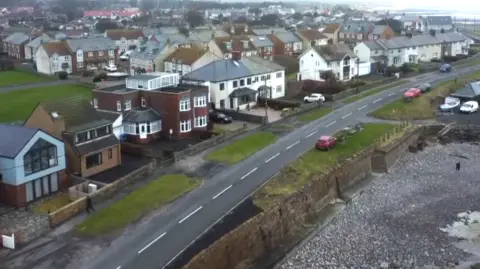
According to the 2021 census, 64% of homes in Beadnell are second homes or holiday lets, up from 55% in 2011.
It is a trend reflected nationally, with the number of second homes rising by approximately 13% during the same decade and the number of holiday lets in England up 40% in just the three years between 2019 and 2022.
Hall’s family has been in Beadnell since at least the 1700s. “Fishing folk mainly,” she says, but her great-grandmother opened the village’s first hotel, an irony not lost on her given her years-long campaign against over-reliance on tourism.
“I don’t hate holiday lets and I don’t hate second homes at all,” she says.
“But, in winter when there are no lights on, it can be very lonely.”
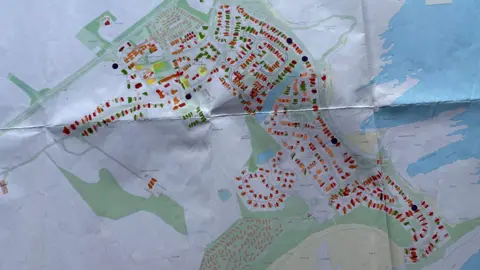
For much of the last half century, planning policy encouraged tourism. As recently as 2016, a new estate of 40 houses, Bernicia Way, was completed with a legal condition they could only be used as second homes or holiday lets.
“We were thinking there would come a point when there was nobody living here at all,” Hall says.
So Beadnell, Bamburgh and Seahouses came together to create the North Northumberland Coast Neighbourhood Plan.
Among its policies was a requirement that all homes built on new sites would come with a legal restriction that they could only be used as a permanent residence.
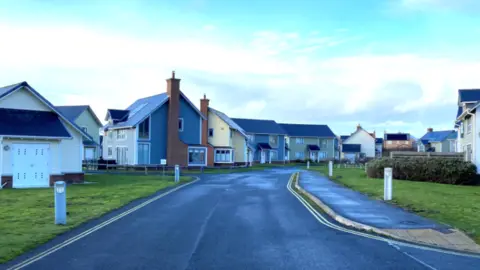
An estate of 45 houses called The Kilns was built and it included nine homes designated “affordable” – available for a set amount below market rate.
The policy has been positive, Hall says, with the number of residents “up by more than 10%”.
“It’s really brought new life,” she says. “We have several new clubs in the village, and a fantastic new playground.”
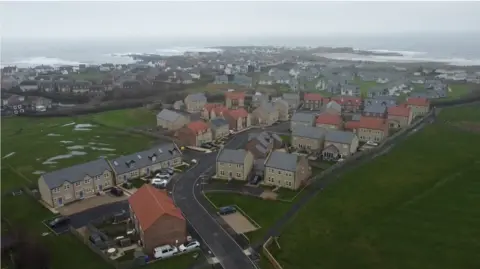
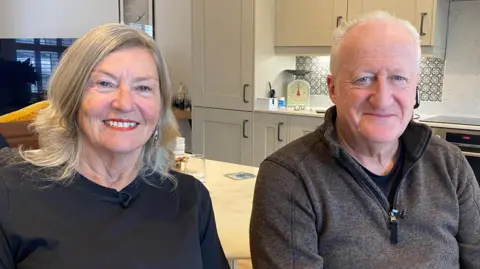
Among the newcomers to The Kilns determined to get “stuck in” to village life are Jacolyn Priestley-Jayes and Tim Jayes, both in their mid-sixties.
They host a new monthly wine club, have joined Beadnell volunteers and Priestley-Jayes has begun a book club.
Jayes is also on the parish council “for my sins”, he says with a wry smile.
“There’s so much going on,” his wife adds.
Hall accepts the policy is “not perfect”. Some houses in The Kilns remain unsold, and rumours abound that a few are being used as second homes despite the legal restriction.
“There are definitely some people who don’t appear to be using their houses as their permanent residence, which is a shame,” Priestley-Jayes says.
Northumberland Estates, which was behind the project, said responsibility for enforcing the planning condition rests with Northumberland County Council and pointed out the residency requirement was “very clearly communicated throughout the sales and marketing process”.
The council said it would be inappropriate to comment further as the situation was “part of an active investigation”.
A further problem is the policy only applies to new sites.
“We’ve had developers buy up an old house, knock it down and replace it with a bigger property which has become holiday lets,” Hall says.
“So that’s a frustration.
“We’ve built The Kilns but there’s not much space for more new houses.”
Despite this, other villages have followed Beadnell in adopting the same policy.
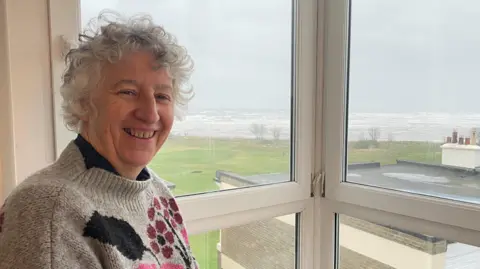
Helen Coyne, 72, has a flat in one of them, Alnmouth, with panoramic, ever-changing views of another of Northumberland’s seemingly endless beaches.
Although this is her second home, she says she understands the rationale behind the changes, and accepts the doubling of council tax since April last year. But she thinks second home owners contribute a lot to local businesses.
“We’re here at least two or three nights every week, I use the lovely gift shop, we go out for meals, we drink in the pubs,” she says.
“When family and friends stay, they do that even more.”
But Tim Farron, the MP for Westmorland and Lonsdale in Cumbria, says some second home owners visit “just a couple of times a year”.
“They’re definitely not sending their children to local schools either,” he adds.
The Liberal Democrat’s constituency includes part of the Lake District National Park where one in four properties is a holiday home.
Farron wants to go even further than applying restrictions to new-builds and is advocating a change in planning law.
“If I wanted to change my house into a fish and chip shop, I’d have to apply for planning permission,” he says.
“But if I want to turn it into a second home or a holiday let, I can just do that. But it has a material impact on the community I live in.”
He wants separate categories of planning use for holiday lets and second homes, which would allow local authorities to limit their numbers.
“That way we can ensure rural communities don’t die.”
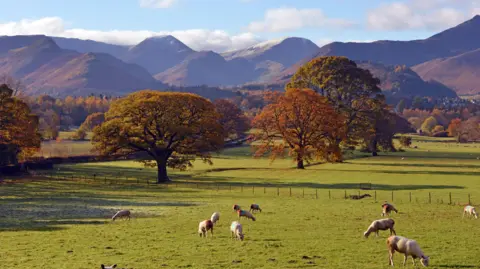
The Lake District National Park Authority’s head of development management, Andrew Smith, agrees the current tools it has are “quite limited” and school populations continue to decline.
The authority has set a target for 1,200 new permanent homes by 2035 but has no control over what happens to the existing housing stock.
“All you can do is approve or refuse new houses and try and facilitate new housing coming forward,” he says.
The Ministry of Housing, Communities and Local Government said it knew “too many second homes and holiday lets can be harmful for communities” and was taking action.
Councils had the power to charge more council tax for second homes and the ministry was “removing the incentive for landlords to prioritise short-term holiday lets over longer-term homes”, a spokesperson said.
“We’ll continue to monitor impacts on communities and consider more powers for councils where needed,” they added.
 PA
PAHowever, Richard Sayer, a former director of the North-East estate agents Rook Matthews Sayer, is wary of anything that might reduce the number of visitors.
“An elderly person living permanently in a village has a perfect right to be there but is not hiring paddleboards and kayaks, or going to restaurants,” he says.
“A holiday let with six people, they’re spending thousands every week which is all going into the local economy.”
He has a holiday property near Keswick in Cumbria and thinks the doubling of council tax on second homes is already causing some to sell up.
“What is really needed is accommodation for the staff who work in the tourist industry, not fewer holiday homes,” he adds.
“Every business in Keswick seems to have a sign up saying they are looking for staff.”
 PA
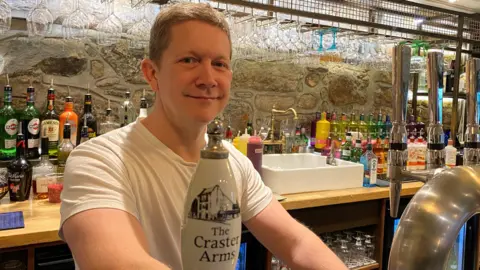
PABack in Beadnell, on the kind of grey blustery day when the rain pecks at your face, the Craster Arms has a steady stream of windbent visitors.
Owner Michael Dawson, who employs about a hundred staff across three cafes and pubs – “young people, local people” – also has little time for policies which deter second homes and holiday lets.
“The gift shops, ice-cream parlours, fish and chip shops, pubs, restaurants,” he says
“Make no mistake, we all rely on them.”
What everyone agrees on is rural communities need more young families amid falling birth rates and an ageing population.
There are about 750 properties in Beadnell but no school and only about 20 children.
Esther Graham, 46, grew up in the village but could only afford to live there with her children by moving in with her parents, who extended their home to accommodate.
“There’s nothing for the kids, no clubs, no brownies or scouts,” she says.
Like Hall, her family have been in Beadnell for centuries but she worries about future generations.
“What we need more than anything is affordable housing and more jobs,” she says.
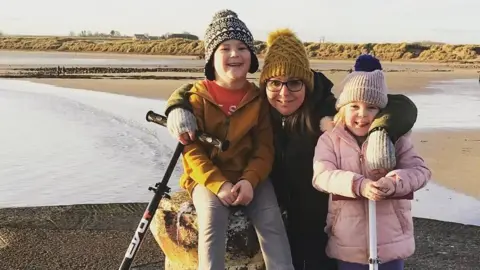 Esther Graham
Northumberland County Council said the provision of affordable housing was one of its “top priorities” and it had updated its Housing Allocation Policy so council houses were only offered to people with “a very strong connection to Northumberland”.
It said, between 2017 and the end of 2025, more than 1,700 affordable homes had been built across the county and planning permission had been granted for 1,369 more.
Follow BBC North East on X and Facebook and BBC Cumbria on X and Facebook and both on Nextdoor and Instagram.
Related internet linksRelated stories