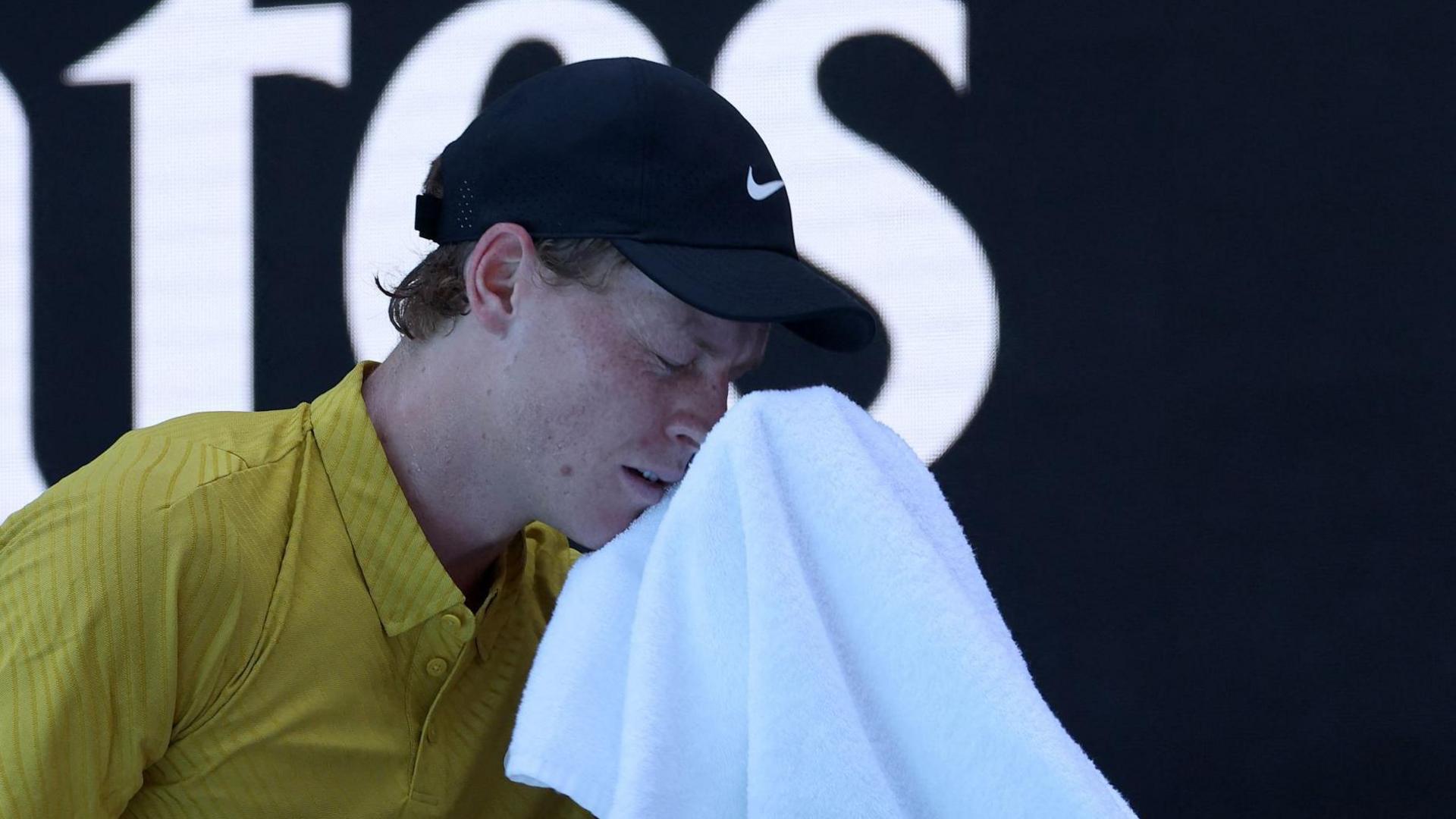
Jannik Sinner won the Australian Open title in 2024 and 2025
Jonathan JurejkoBBC Sport tennis news reporter in Melbourne
- 45 minutes ago
Jannik Sinner’s ambitions of winning a third straight Australian Open title looked close to being over as the Melbourne heat crept towards 40C.
In the end, the rising temperatures helped the cramping Italian come through a testing third-round match – because the Grand Slam tournament’s heat rule was invoked.
Only coming off court and having the roof pulled over saved Sinner from a shock defeat by American world number 85 Eliot Spizzirri.
“I got lucky with the heat rule,” conceded Sinner, who came through to win 4-6 6-3 6-4 6-4.
Sinner was undoubtedly the biggest winner on a sweltering day where play was suspended and almost 100,000 fans were warned to take care in the heat.
Matches on the show courts are being played in cooler conditions under the roof, but there is no play on the outside courts because of the heat.
Mist tunnels, water machines and sun umbrellas helped cool down spectators at Melbourne Park.
Ball kids placed their hands on their feet – instead of the court – to avoid burning their palms when crouching at the net post.
How Sinner benefitted from heat rule
With the match level at one set all, Sinner could barely walk at the start of the third set and fell a break down at 3-1.
Then came a huge slice of fortune in a moment of sporting theatre.
Seconds after the fourth game, with Sinner looking finished, the Australian Open’s heat stress scale hit five – meaning the top seed was able to go off court for treatment.
It was a pivotal moment in the momentum of the match.
There is no question the heat rule benefitted Sinner, who immediately limped to the locker room.
Spizzirri looked bemused as he shook his head. But the rules were implemented correctly.
Sinner broke back immediately after an eight-minute delay while the roof on Rod Laver Arena was closed as per the ruling.
While still moving tentatively, a calmer Sinner took Spizzirri’s serve again for 5-4 and secured the third set before going on to secure a dramatic victory.
Play is stopped at the Australian Open when the heat stress scale hits its maximum of five.
Matches on the show courts – which includes Laver – stop at the end of an even game in order for the roof to be closed and allow the air circulation system to cool the court.
The temperature dropped to about 26C during the fourth set of Sinner’s match.
Sinner now looked much more comfortable in his movement, even though he often stayed stood at the change of ends, and his ball-striking became too much for Spizzirri to handle.
A puff of his cheeks on his way to the net indicated Sinner’s relief.
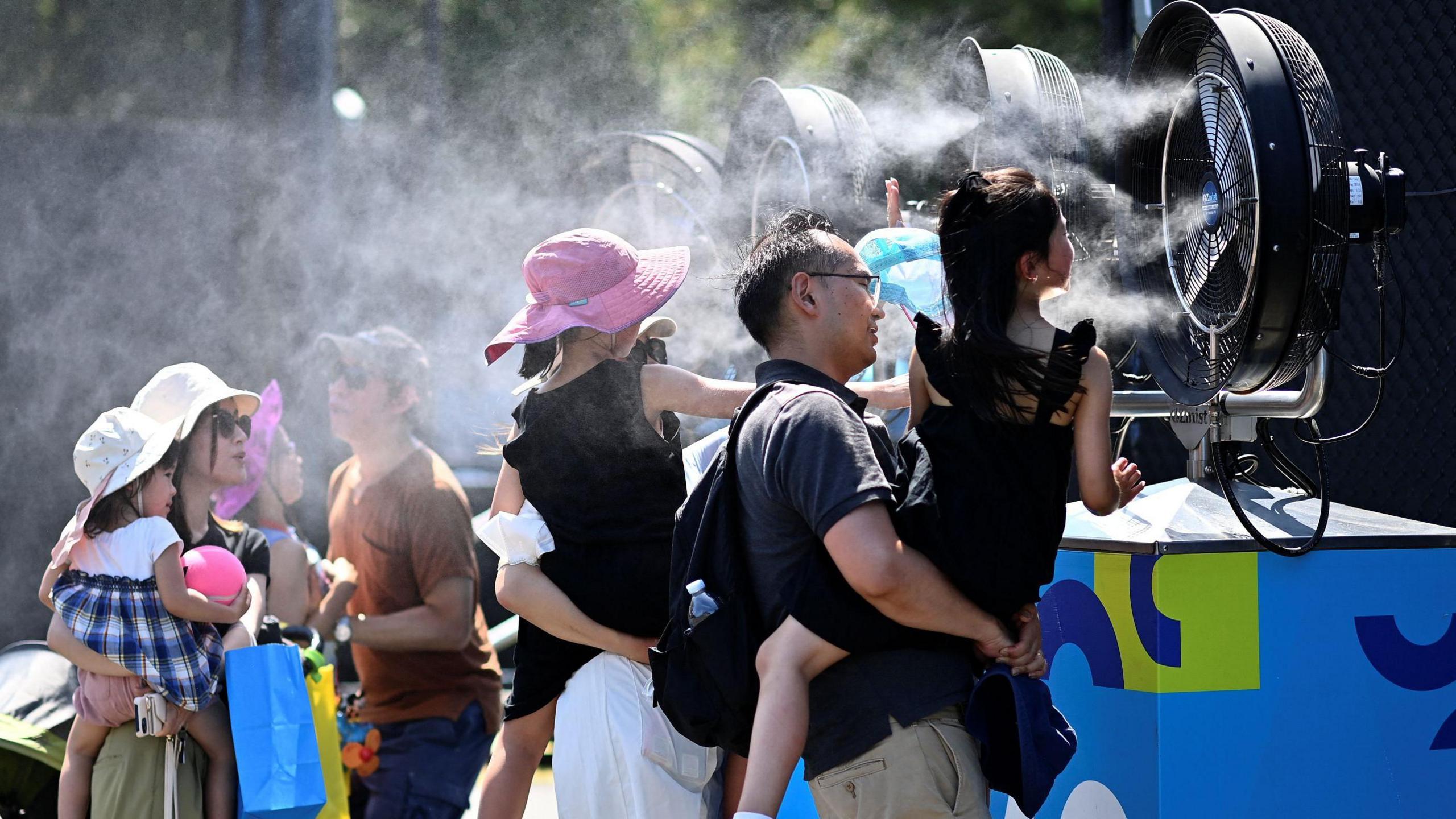
Mist tunnels, water machines and sun umbrellas are provided throughout Melbourne Park to help people cool down
What measures were in place?
Tournament organisers brought Saturday’s play forward by 30 minutes in anticipation of the searing temperatures hitting Melbourne.
Play began on all courts at 10:30 local time (23:30 GMT) instead of the usual 11:00 start.
It always looked likely the action would be suspended in the afternoon, given the Australian Bureau of Meteorology had issued a severe heatwave warning.
The Australian Open’s heat stress scale measures four factors: radiant heat (or the strength of the sun), air temperature in the shade, relative humidity and wind speed.
British junior Hollie Smart was among the early starters and had to retire from her first-round match after also suffering cramp.
When Sinner and Spizzirri took to court at about 12:30 for the second match on Laver, chair umpire Fergus Murphy reminded the players about the protocols which could be enforced.
At 13:30, the scale read 3.6. By 14:30, it had climbed to five – ticking over from 4.9 seconds after Sinner lost serve.
Play on the outside courts without a roof are stopped indefinitely. It is not scheduled to start again until at least 18:00 local time (07:00 GMT).
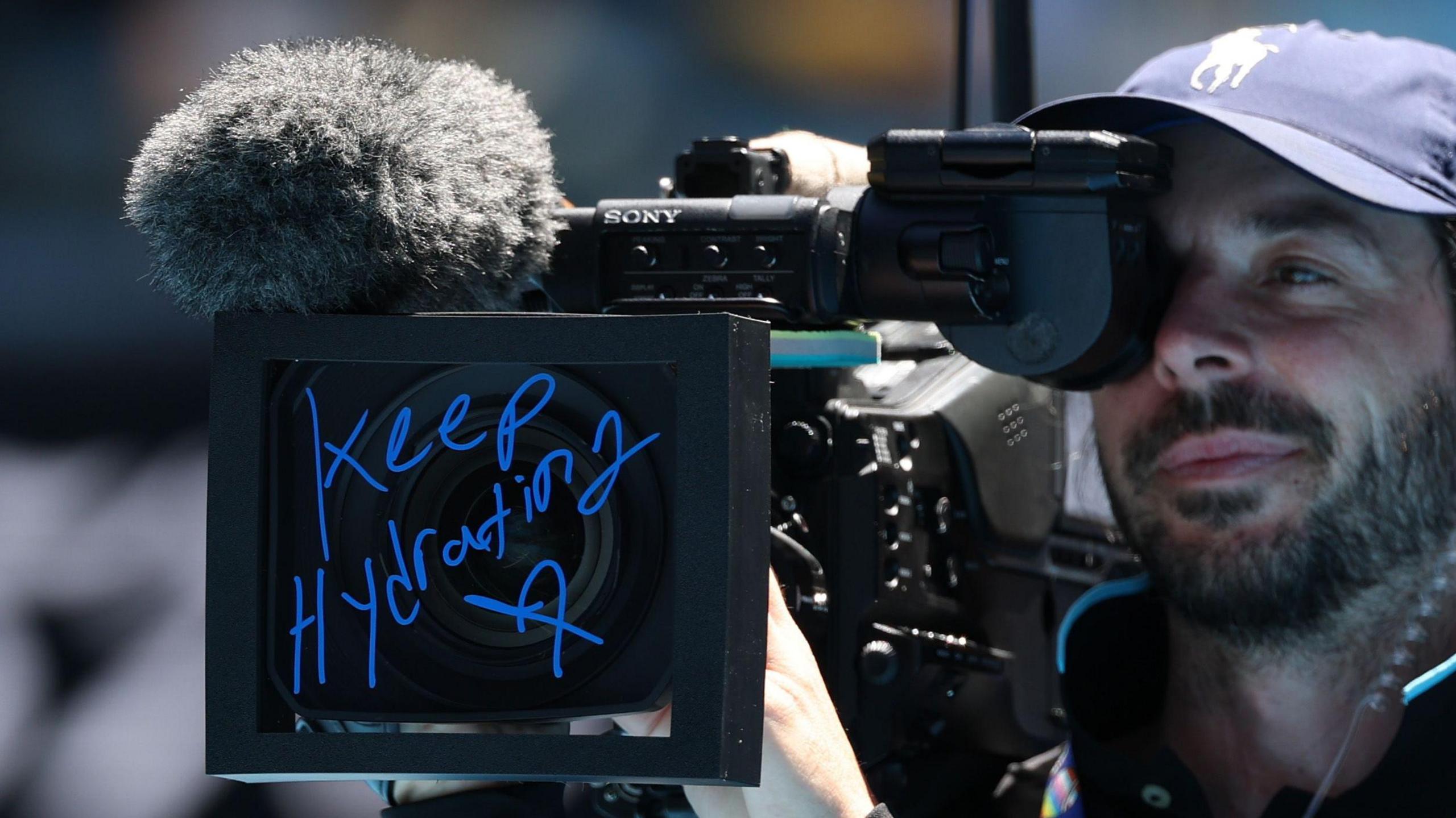
Amanda Anisimova used her post-victory signing of the camera lens to remind fans to “keep hydrating”
Ball boys and girls will work 45-minute rotations instead of the usual one hour, with an increased one-and-a-half-hour break between shifts.
Fans were reminded to stay vigilant and take precautions.
Another 100,000-strong crowd was expected at Melbourne Park for Saturday’s third-round matches.
The Australian Open says the facilities throughout the site will help people cool down, including:
-
46 water bubblers/refill stations
-
56 water misting fans and two high-powered typhoon misters
-
Hydration stations at every entrance
-
Staff offering water in queues
-
9,000sqm of additional shade coverage
Temperatures are also predicted to top 40C on Tuesday, when the singles quarter-finals are scheduled to begin.
“The weather being crazy [means] a lot of adjustment on the strings and your approach to the match,” said women’s world number one Aryna Sabalenka, who plays Canadian teenager Victoria Mboko in the fourth round on Sunday.
“It’s going like a rollercoaster. We’ll see who adjusts better in the next days.”
Related topics

-
- 16 August 2025